

Community Center "St. Cyril and Methodius"
Founding in 1914
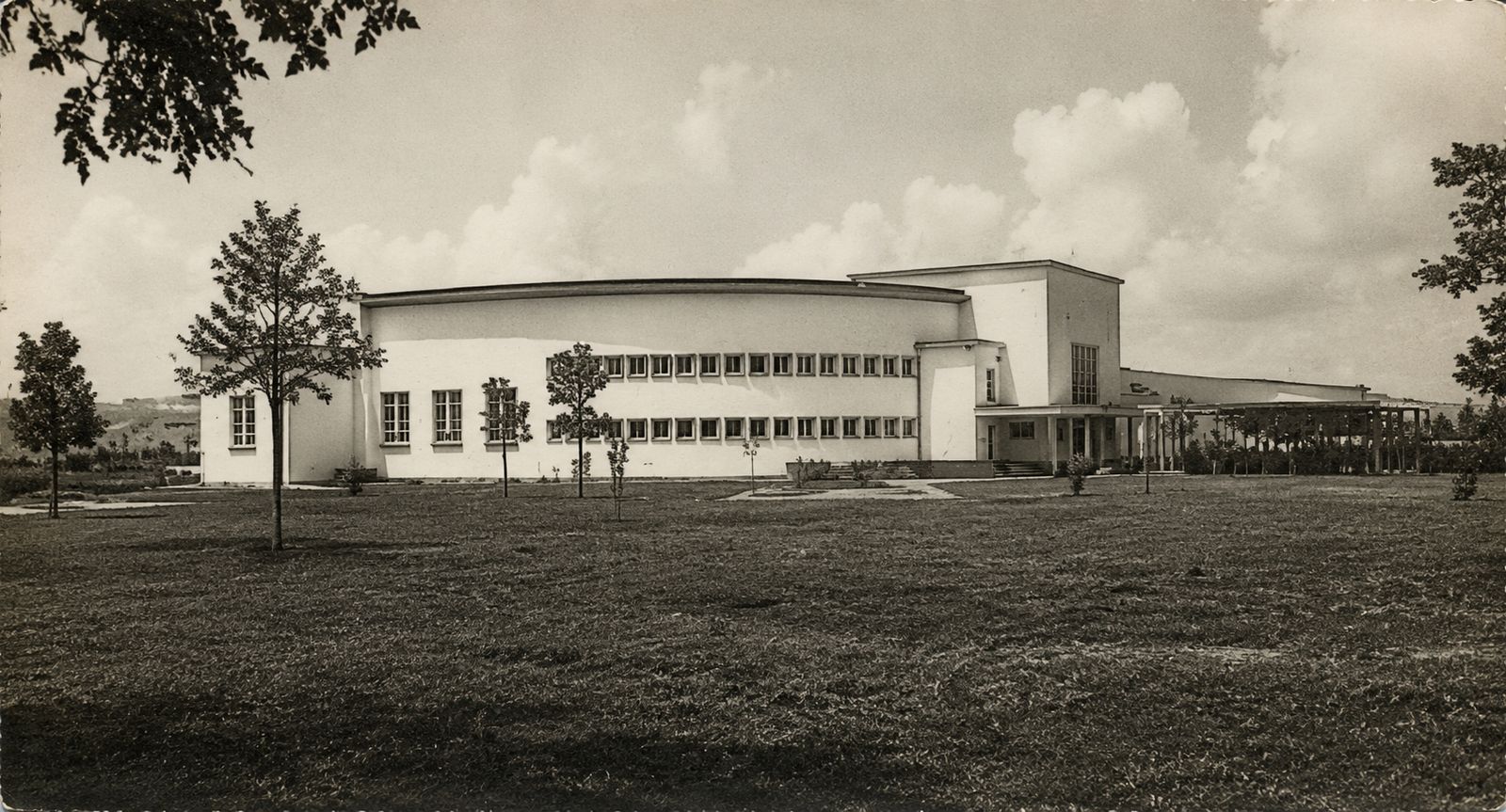
The Community Center "St. Cyril and Methodius" in the town of Banya was established on November 8, 1914, by a group of patriotic Bulgarians. They named it after the Equal-to-the-Apostles Saints, the brothers Cyril and Methodius.
A home for culture and patriotism
The community center has been a never-fading light of patriotism and Bulgarian culture throughout difficult and challenging years. The initial gatherings and parties took place in the rooms of the old school, and the first theater stage was set up in the courtyard in front of it. Later, the stage was moved to G. Barekov's warehouse, and eventually to the house donated by Penka Popova on the square.
Plans for a dedicated building
The inconveniences were significant, but the enthusiasm, unity, and solidarity were even greater. In 1921, a plan was made for a beautiful two-story building that would house the community center, a theater hall, and a school.
Karlovo Baths
Unrealized community center project
The estimated value of the building according to the project was 2,000,000 Bulgarian leva. However, at that time, the municipality had only half of the amount and a budget of 434,000 leva. With these funds, the dream of the people of Banya could not be realized. As a result, the project remained unrealized.
Resort status and the Central Bath
The Karlovo Baths were declared a resort in 1921 by the Ministry of Interior Affairs at that time. The mineral bath, opened in 1936, is now known as the "Central Bath."
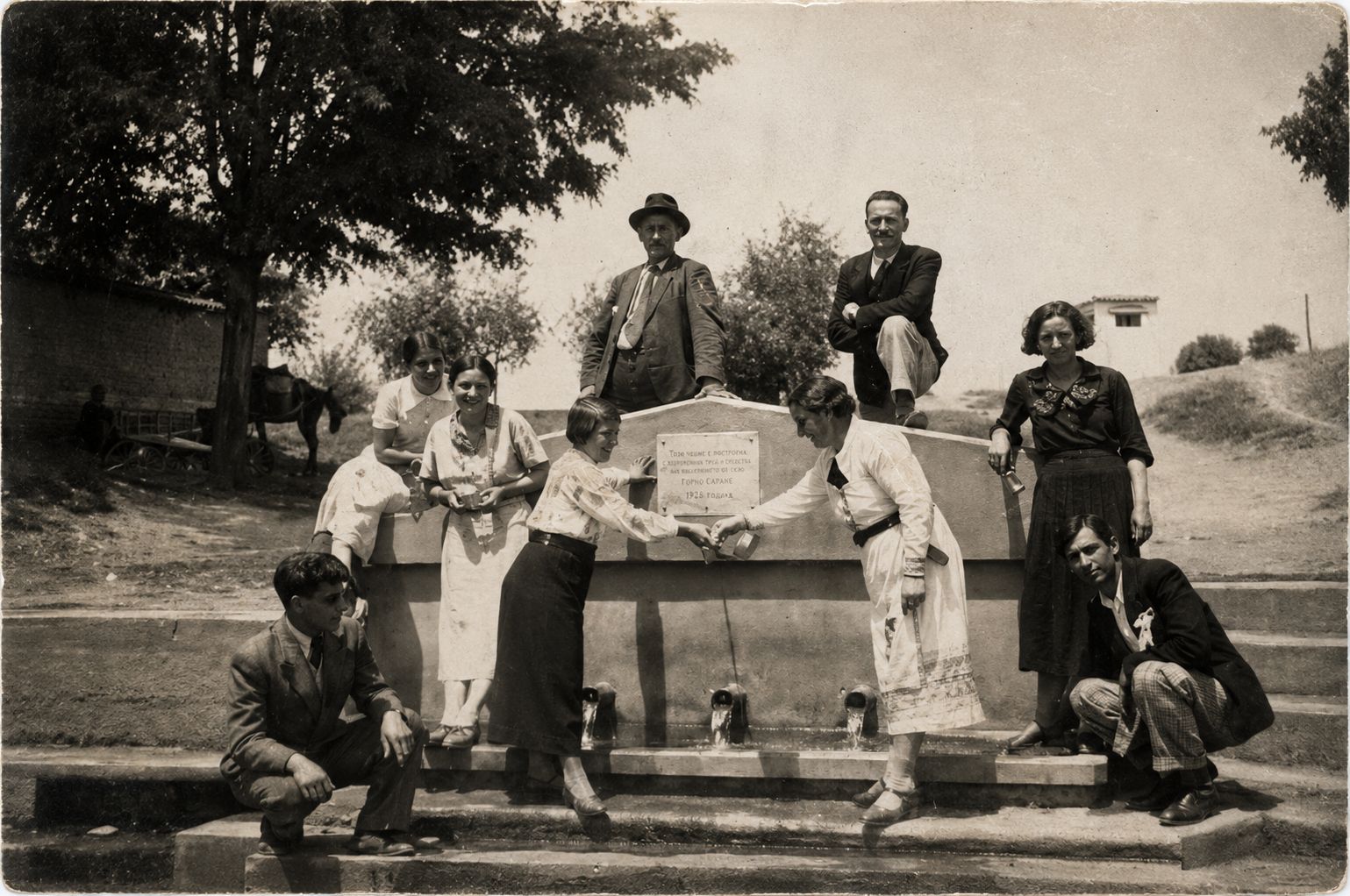
Built with voluntary local labor
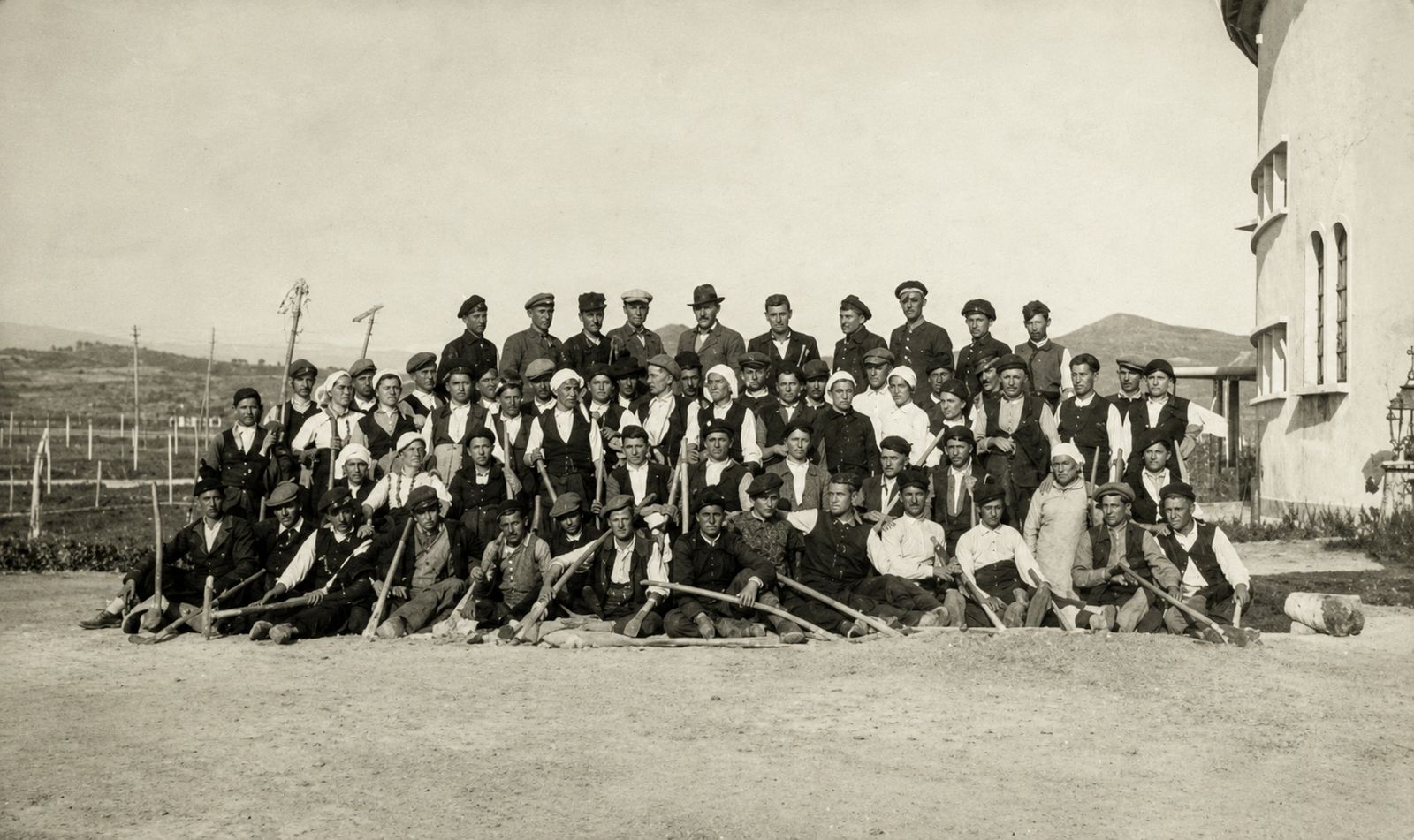
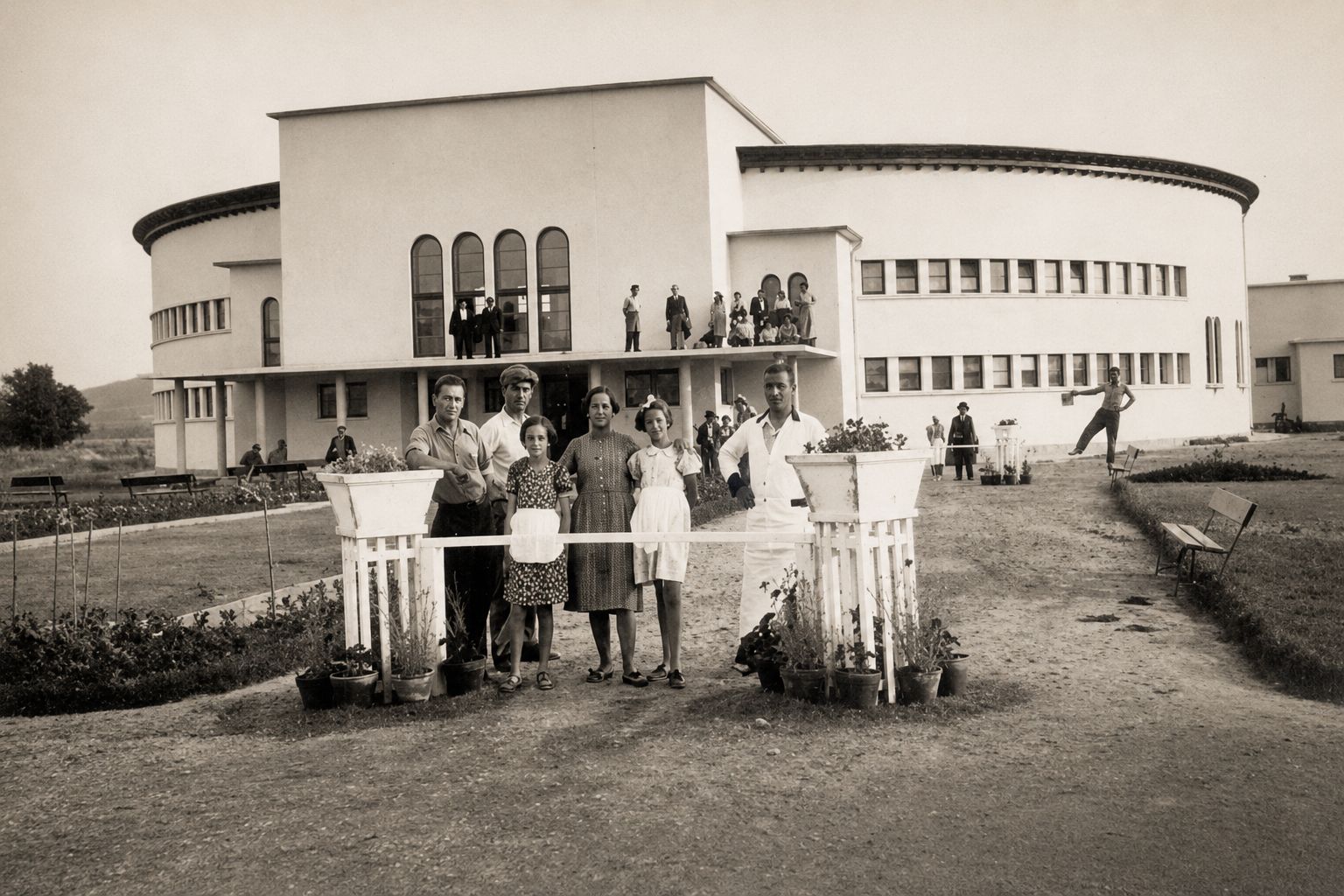
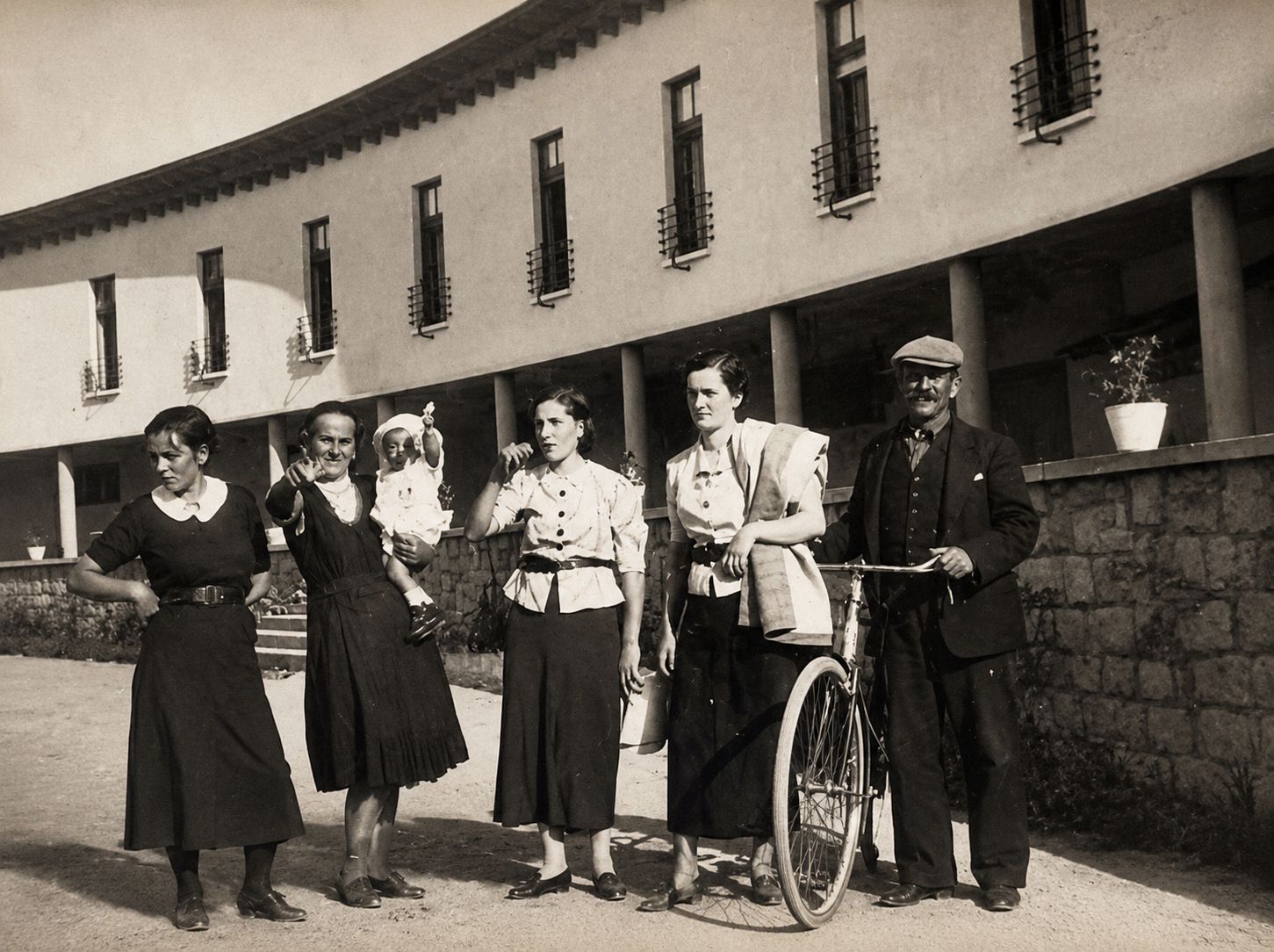
In 1952, with the voluntary labor of the population of Banya, the construction of the current building began. During those years, the teacher Stancho Ivanov Savov actively contributed, and in 1956, the community center was completed and officially inaugurated.
National balneological resort
In 1958, the "Banche" Bath was constructed, and in 1963, the village of Banya in Karlovo was declared a nationally significant therapeutic balneological resort.
Mineral Springs
Neolithic life near the springs
Life around the hot mineral springs dates back to the Neolithic era, around 6,000 BC. About 1 kilometer southeast of the town, there is a large settlement mound known as the Plaska Mound. The entire area around it is also called Plaska.
Plaska Mound cultural layers
The mound is 5 meters high and has 7 cultural layers. In the western part, the mound is intersected by the railway line connecting Plovdiv and Karlovo. The settlement originated in the Neolithic era and existed until the early Chalcolithic period, from the 6th to the 4th millennium BC.
Archaeological discoveries
Partial archaeological excavations conducted here have revealed dwellings, hearths, pottery vessels, white-paste painted ceramics, fragments of cult tables, as well as artifacts made from stone, flint, bone, and horn. Several findings from the ancient era have been discovered in the vicinity of the settlement, including an electron stater (coin) from the city of Kizik dating back to the 5th century BC.
Mentovarna and Rozovarna
Ancient trade connections
This valuable finding is indicative of the presence of trade connections between the population inhabiting the Struma River Valley and important economic centers during antiquity. Near Banya, there were several Thracian settlements.
Thracian settlements and mounds
One of them is located on the southern slope of the Momini Girdi Hills, northeast of the town. In the territory of Banya and its vicinity, numerous Thracian burial mounds can be found. To the north of the town, in the area known as Petite Mogili (The Five Mounds), there is a Thracian necropolis consisting of five burial mounds, which were more numerous in the past.
Settlement near the Roman road
There was also an ancient settlement southwest of the present-day town, located near the Roman road station "Viamata," situated between Banya and the village of Voynyagovo. Large clay pots have been discovered in various locations within the settlement.
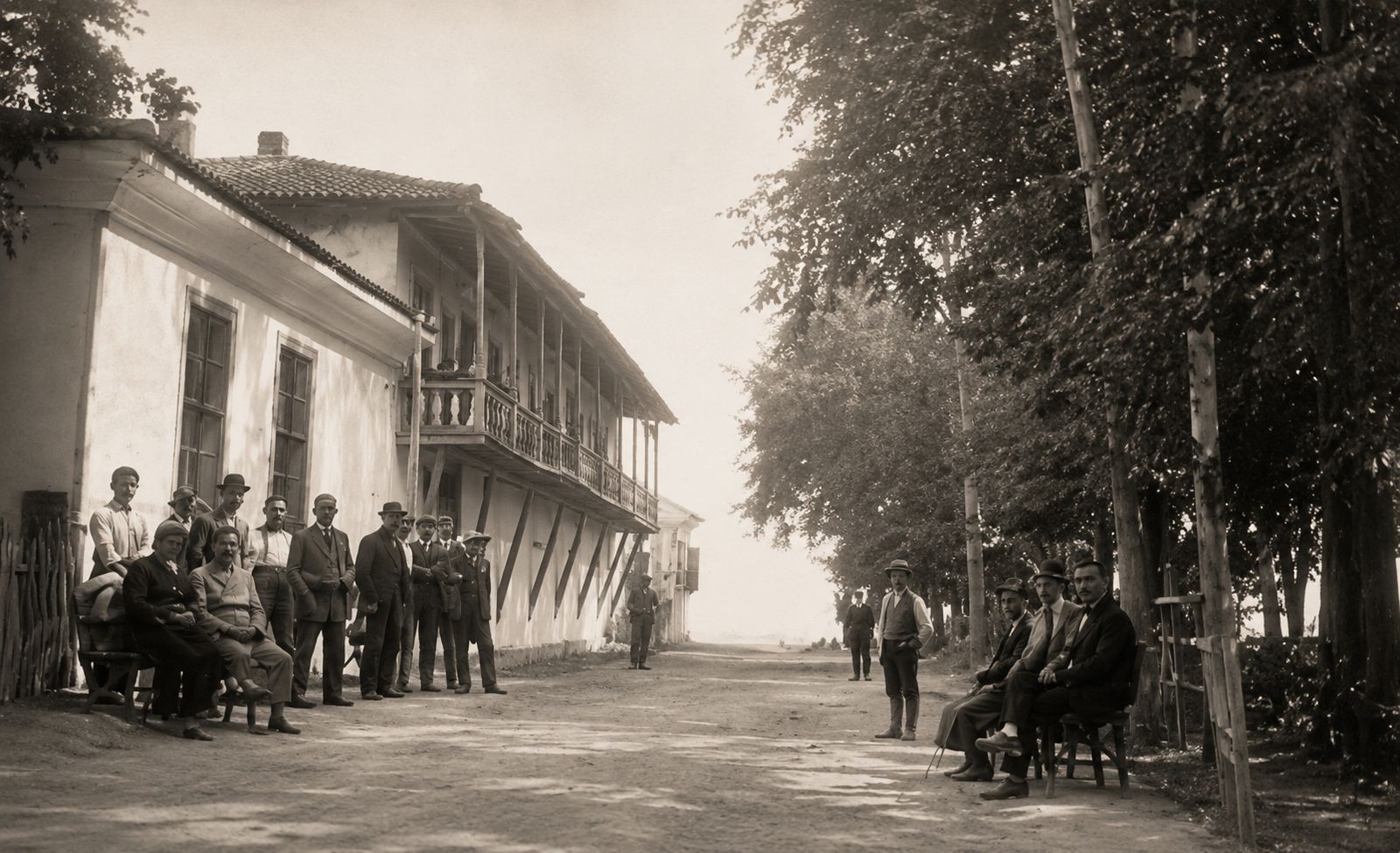
G. Kichukov's Hotel - Karlovo Baths
Bronze dove lamp
During the construction of the community center in the center of the village, an exquisite bronze lamp in the shape and size of a real dove was discovered. The artifact dates back to the 2nd-4th centuries and is well-preserved. It is currently located in the Historical Museum in Karlovo.
Medieval coin treasures
In the Middle Ages, during the 13th and 14th centuries, Banya was a small village with a small population. Two medieval coin treasures have been discovered from this period, one of which consisted of 40 gold Byzantine coins from the reign of Emperor Isaac II Angelos (1185-1195).
Ottoman-period records
During the Ottoman rule, the settlement continued to exist but shifted to the north of the springs. Towards the end of the 15th century, when Karlovo was still an insignificant village, Banya was mentioned in the will of Alyaedin Ali Bey, the grandson of Mikhail Bey. This bey owned water mills and tanning workshops on the Struma River, which were managed by Voysil ben Kara Ali, a resident of Banya.
Middle Ages, 13th and 14th centuries
Bronze dove lamp discovery
During the construction of the community center in the center of the village, an exquisite bronze lamp in the shape and size of a real dove was discovered. The artifact dates back to the 2nd-4th centuries and is well-preserved. It is currently located in the Historical Museum in Karlovo.
Banya in the Middle Ages
In the Middle Ages, during the 13th and 14th centuries, Banya was a small village with a small population. Two medieval coin treasures have been discovered from this period, one of which consisted of 40 gold Byzantine coins from the reign of Emperor Isaac II Angelos (1185-1195). During the Ottoman rule, the settlement continued to exist but shifted to the north of the springs.
Mentioned in a 15th-century will
Towards the end of the 15th century, when Karlovo was still an insignificant village, Banya was mentioned in the will of Alyaedin Ali Bey, the grandson of Mikhail Bey. This bey owned water mills and tanning workshops on the Struma River, which were managed by Voysil ben Kara Ali, a resident of Banya.
Rebuild after the liberation
Return after the Liberation
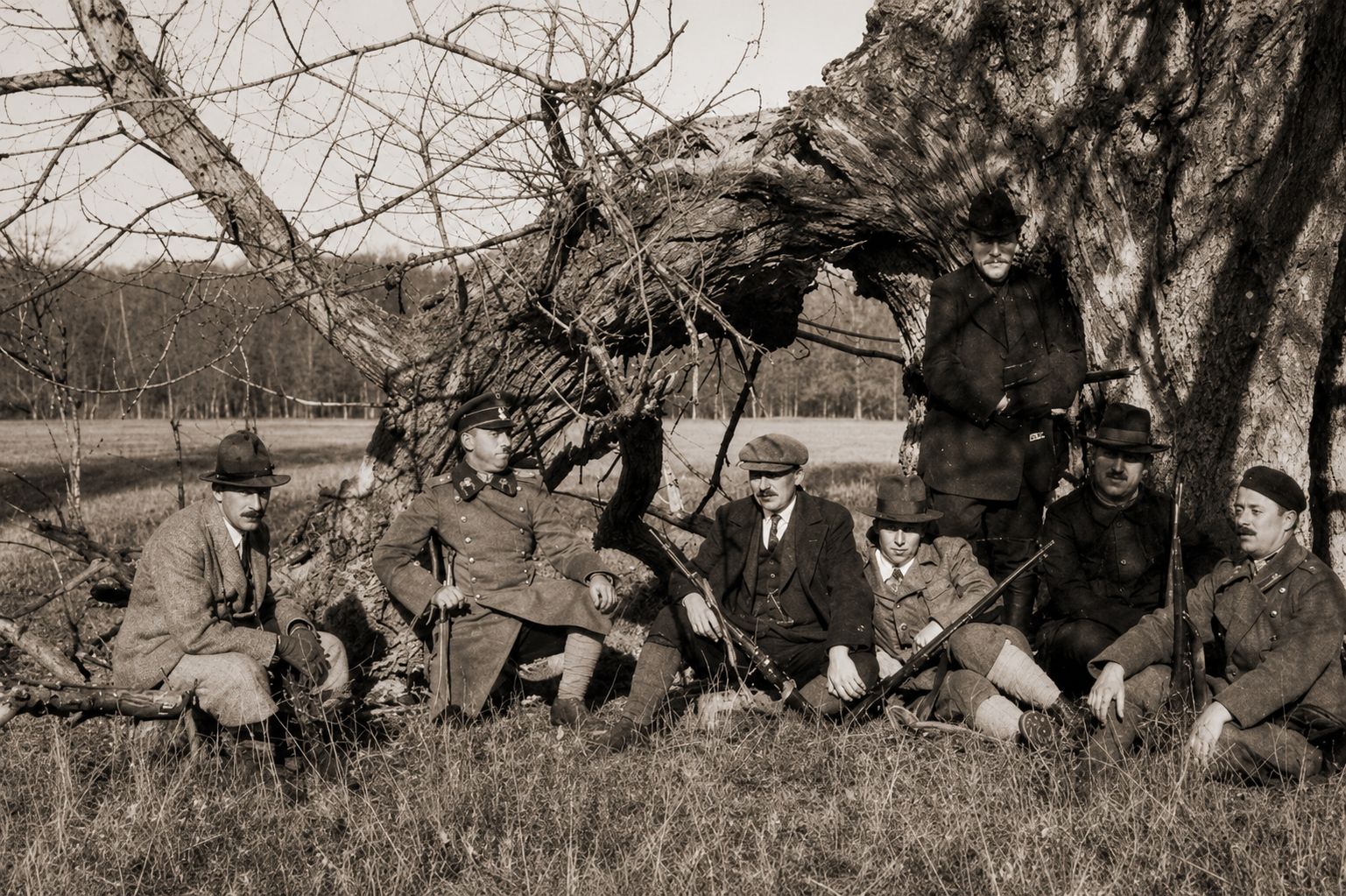
When the displaced population returned, they found only three houses, as the rest had been burned down. After the Liberation, the village began to rebuild, and many people from neighboring Balkan villages resettled there. By 1932, the village had grown to include 250 houses with a population of around 1,250 people.
Resort status and new connections
The houses had large yards and were relatively well-maintained and clean. In 1921, the Ministry of Internal Affairs declared Hisar Baths, Karlovo Baths, Narechenski Bani, and others as resort areas. In 1930, the village was electrified, and in 1933, it was connected to the railway line between Plovdiv and Karlovo.
Mineral bath administration
By Decree No. 528 of 1936, issued by Tsar Boris III, a regulation law was enacted, extending the tenure of the state mineral baths under the administration of the Banya Municipal Authority and the Karlovo Municipal Authority. From April 20, 1931, to April 20, 1936, they were responsible for all construction and improvement works at the mineral springs.